
What our new report, Who Pays the Water Bill?, reveals about the UK's food
Written by Lewis Ryder-Jones, Advocacy Manager We tend to think of climate change as a story about carbon. But for most people living through it, the crisis arrives as water. Too little of it, too much of it, or too dirty to use. Droughts that wither a harvest, floods that drown a field, river s and aquifers drawn down faster than the rain can refill them. If climate change is the shark, water is its teeth.
And those teeth bite hard on our food. For example, Did you know that Farming uses around 70% of the world's freshwater? so when water fails, harvests fail with it.
The Global Commission on the Economics of Water warns that nearly 3 billion people, and more than half of the world's food production, are in places where the water held in rivers, lakes, soils and aquifers is projected to decline. And here is the part we rarely see from the UK. A lot of that water stress is bound up in our own weekly shop. Around a quarter of the world's crops are already grown in places where water is highly stressed or highly unreliable.
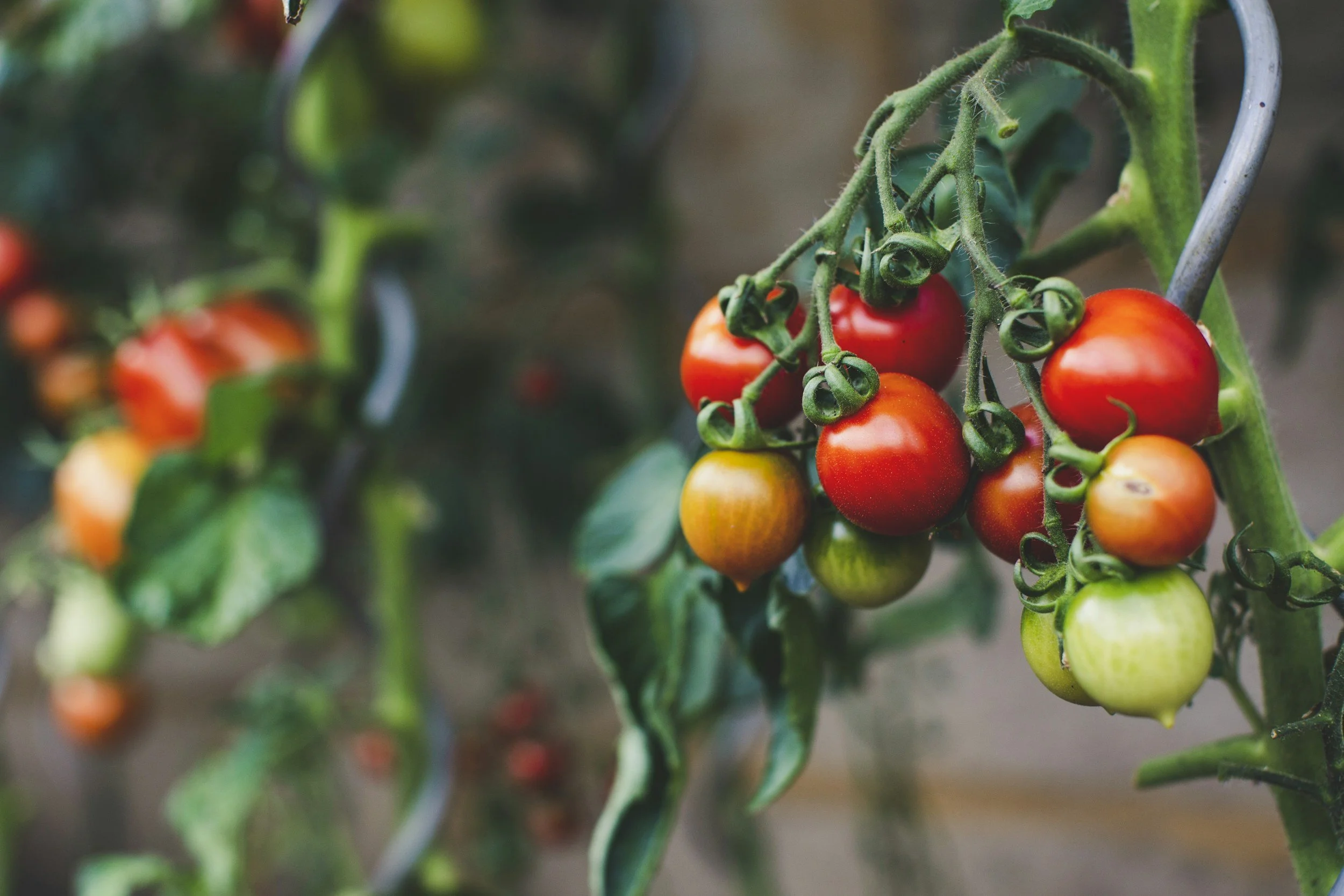
Consider a tomato bought in a British supermarket in February. It did not grow in British soil, and it did not drink British rain. It took around fifty litres of water to produce, drawn from rivers and aquifers thousands of miles away, very possibly from somewhere like Morocco in some of the most water-stressed farmland on earth. And yet, you will not find that water listed on the label.
Hydrologists call this "virtual water": all the water used to grow or make something, hidden inside the finished product. A cup of coffee carries around 140 litres of it. A single avocado, 300. Every item in the trolley has a quantity of water behind it, and for the UK, most of that water lies abroad. Around 70% of our national water footprint sits outside our borders, and roughly 40% of it is drawn unsustainably, often from places already running dry.
Counting litres only tells part of the story, though. A large water footprint is not automatically a problem, and a small one is not automatically fair. What matters is how that water is used, and who bears the cost when it gets polluted or runs dry. That is the thinking behind Fair Water Footprints. A fair water footprint means that growing our food does not pollute the rivers people depend on, and does not take more water than a river or aquifer can replenish. It means the communities living where our food is grown have safe water and decent sanitation, that the wetlands and ecosystems which store and clean water are protected, and that those communities are better able to withstand the floods and droughts climate change is making more frequent.
This is the subject of our new report, Who Pays the Water Bill?, which we published last month. Its central finding is one that, if you work in development, you will recognise. But if you’re reading this from outside that space, this might be new news to you:
Water insecurity is not simply nature running short. It is a failure of governance. Someone, somewhere, decides who gets the water, and it is rarely the people living beside the river.

In Chile's Petorca valley, export avocado plantations draw on an exhausted water system while many local households are left without a reliable supply of their own. In Morocco and in Kenya, the pattern repeats. The water leaves, embodied in the things we buy, while the communities who live at the source are left with the depletion, the pollution, and sometimes less say over their own resource than a supermarket on the other side of the world.
For those of us in international development, this reframes something important. We are used to thinking of water as infrastructure, as boreholes and pipes and sanitation, all of it vital. But funding the borehole without addressing who controls the water is treating the symptom rather than the cause. The more durable work, and the harder work, is governance: helping the people upstream and downstream of a stressed river come together to share it fairly. That is precisely the kind of systemic change that climate finance is well placed to support.
There is an uncomfortable truth at the centre of all this. Most of this harm is entirely legal. Draining an aquifer dry to grow crops for export, or polluting the river below a farm, often breaks no rule. It is permitted, and often even certified as sustainable. You cannot hold anyone to account for breaking a rule that does not exist, which is why voluntary standards, on their own, will never be enough.
Fair water use abroad and food security at home are not competing goals. They are the same goal. The question “Who Pays the Water Bill?” is not rhetorical. It has an answer, and right now it is the wrong people. Changing that is a choice we can make.
Have any questions?Email our team for a chat.